How powers fit progression
Powers turn investor progress into run improvements, then feed back into stronger rebirths and evolution prep.
Powers should be chosen around run speed and rebirth planning. Prioritize utility that reduces friction before chasing unverified late-game effects.
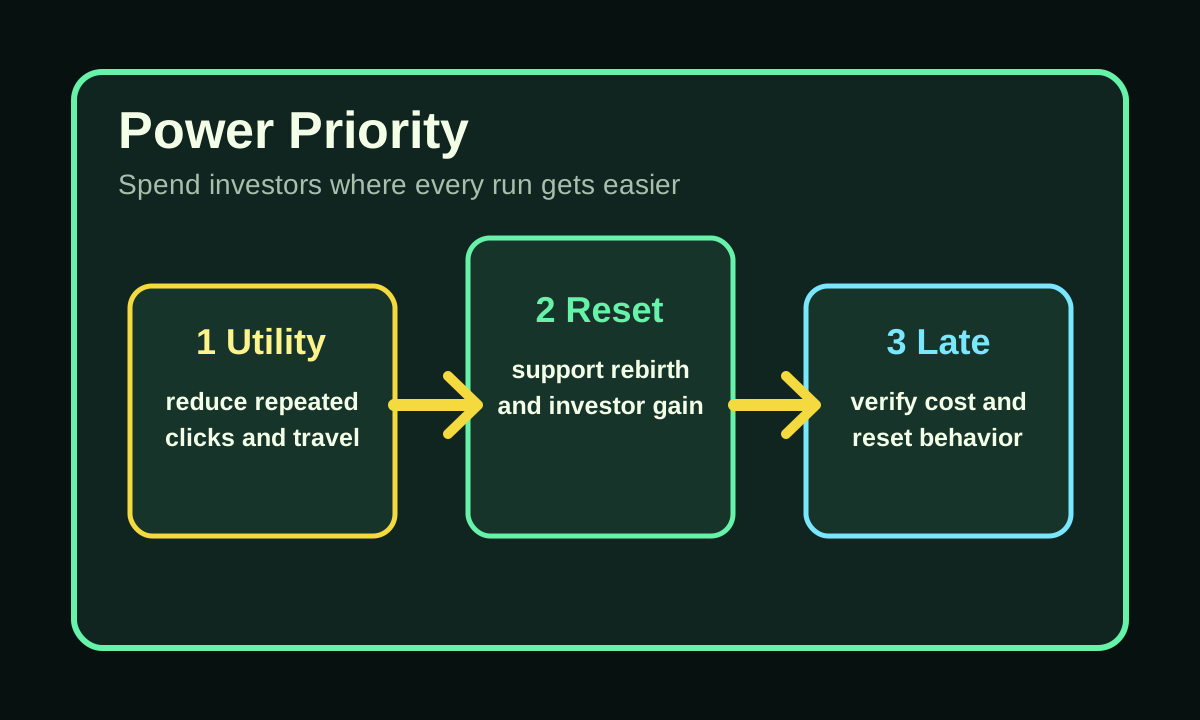
Powers turn investor progress into run improvements, then feed back into stronger rebirths and evolution prep.
Early priorities should favor quality-of-life and run speed. Midgame choices should support investor growth and reset loops.
Do not spend around copied tier lists without checking current patch costs and what resets later.
Current competitor and wiki pages point players toward utility, income, and reset-support powers. Treat names and costs as community-reported until verified in the current patch.
A good early power should either shorten every run or remove a task you repeat constantly. If a power only helps a late system you have not reached, keep the investors for a clearer unlock.
Remote Buy is repeatedly highlighted by guide pages because it attacks run friction rather than a single stat. The launch page treats it as a high-priority candidate, but the exact unlock cost and current effect need manual testing.
Before adding a full power table, each power needs the same audit fields so the page does not become a copied or stale list.
The first version recommends utility and reset support first, but exact rankings need current cost and effect verification.
Remote Buy is flagged as a high-value quality-of-life power in the brief, but current cost and unlock details still need testing.
Yes. Evolution planning depends on total investor progress, including investors spent on powers according to the source brief.
No. Prioritize powers that improve repeated runs or unlock the next reset target, and delay powers with unverified costs or effects.